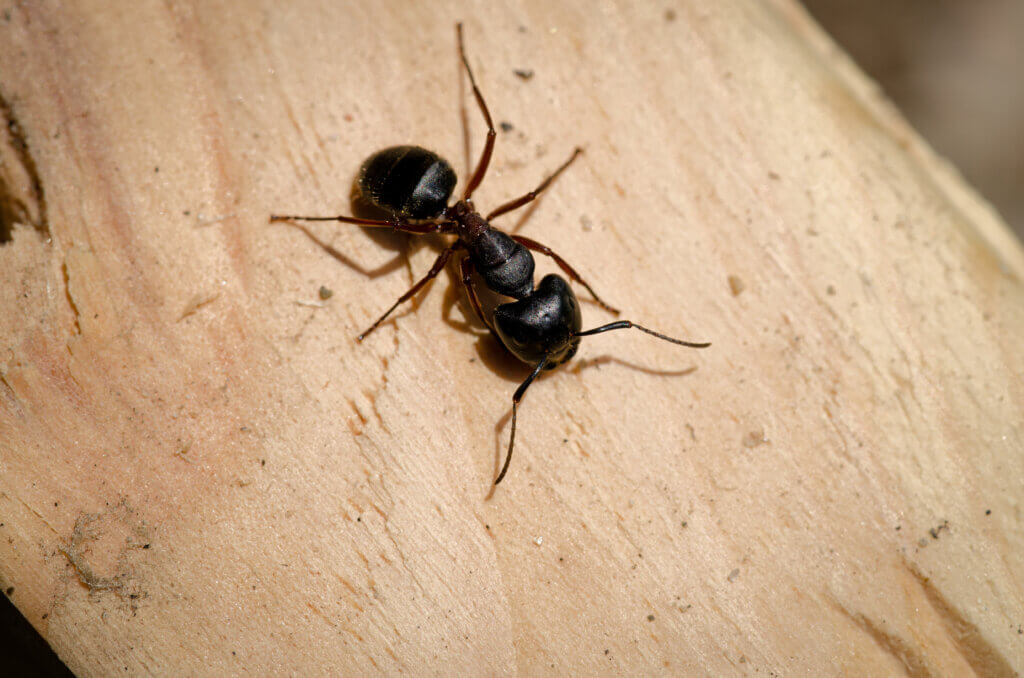
The largest ant you will see indoors on Long Island, and the one most often mistaken for a harmless nuisance. Carpenter ants do not eat wood, they excavate it — usually wood that is already damp — which means finding them is as much a moisture problem as a pest problem.
Signs in the house
- Large black ants, a quarter to a half inch long, moving indoors after dusk.
- Coarse sawdust with insect parts in it, piled below trim, window sills or beams.
- A faint rustling in wall voids on quiet evenings.
- Winged ants at windows in spring — a sign the colony is mature and nearby.
- Soft or hollow-sounding wood around bathrooms, chimneys and roof valleys.
Size
6-13 mm; workers vary in size within one colony.
Active
April through September, peaking on warm nights.
Nests in
Damp structural wood, hollow doors, insulation, stumps and standing trees.
Risk
Structural. Galleries weaken framing over several seasons.
Treatment window
Same week. Activity usually stops within ten days.