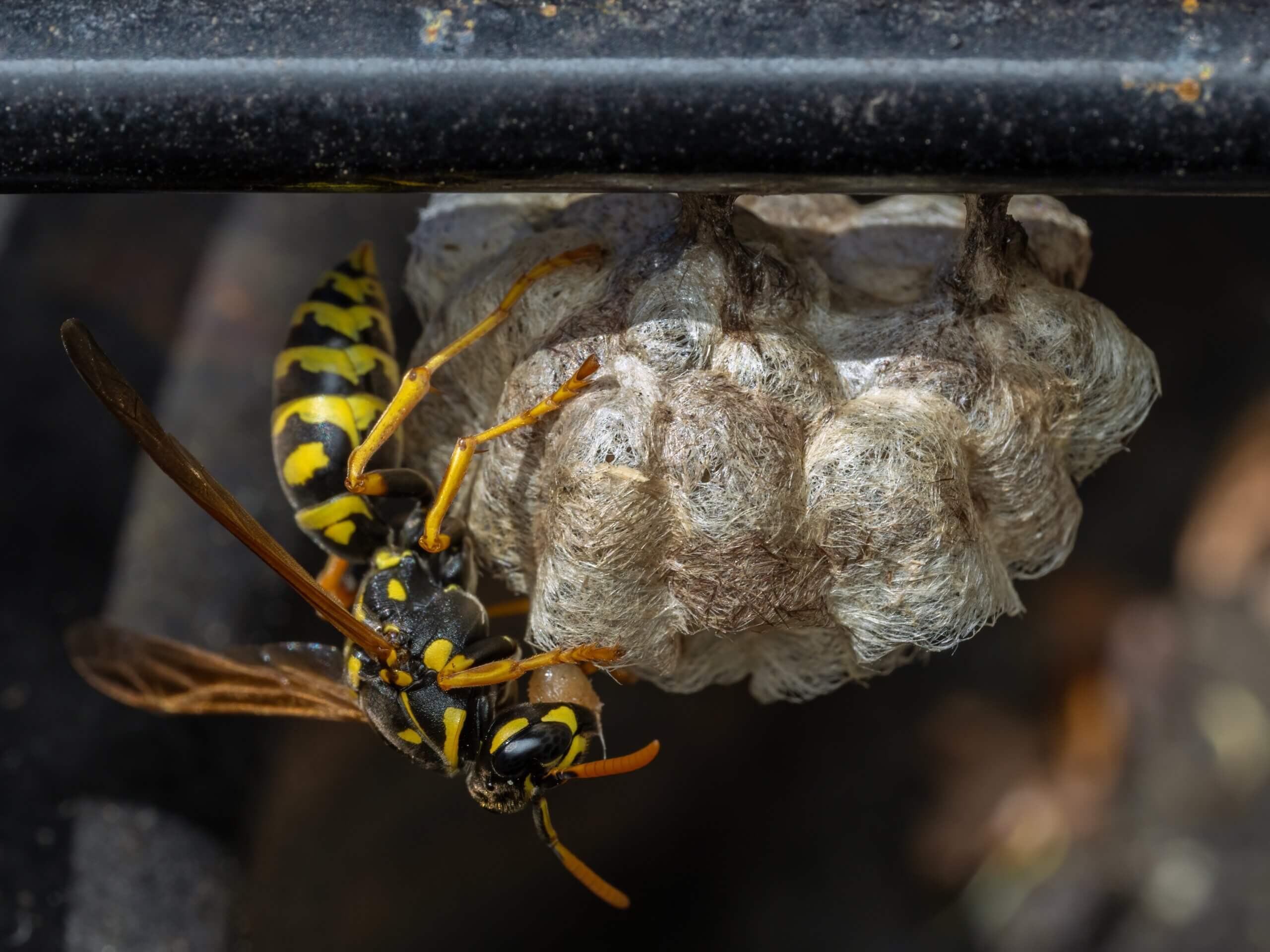
A yellowjacket colony starts in April with a single overwintered queen and a nest the size of a golf ball. By the second week of August it holds a few thousand workers, and the queen has stopped laying worker eggs. That shift is the whole story of why the last six weeks of summer feel so much worse than the rest of the year.
The larvae stop paying
Through the spring and early summer, workers hunt insects to feed the larvae, and the larvae secrete a sugary liquid the adults live on. It is a closed loop. When the queen stops producing brood, that supply ends, and several thousand adult wasps have to find sugar somewhere else.
Somewhere else is your soda can, the fallen fruit under the pear tree, the trash bin by the back door, and the tray of half-finished drinks at a graduation party. The wasps are not more aggressive in August in any behavioural sense — they are hungrier, and hunger puts them in contact with people.
What not to do
Do not pour anything down a ground nest, and do not plug a wall-void entrance. Sealing the hole drives the colony inward, and the wasps chew through drywall to get out. Aerosol cans sold for wall voids reach a fraction of the nest and provoke the rest.
The frost deadline
Every colony dies at the first hard frost, and the nest is never reused. That is real, but it is also six to ten weeks away in August, which is most of the outdoor season. If the nest is near a door, a play area or a spot people sit, waiting it out is not much of a plan.